

Why This Study Matters
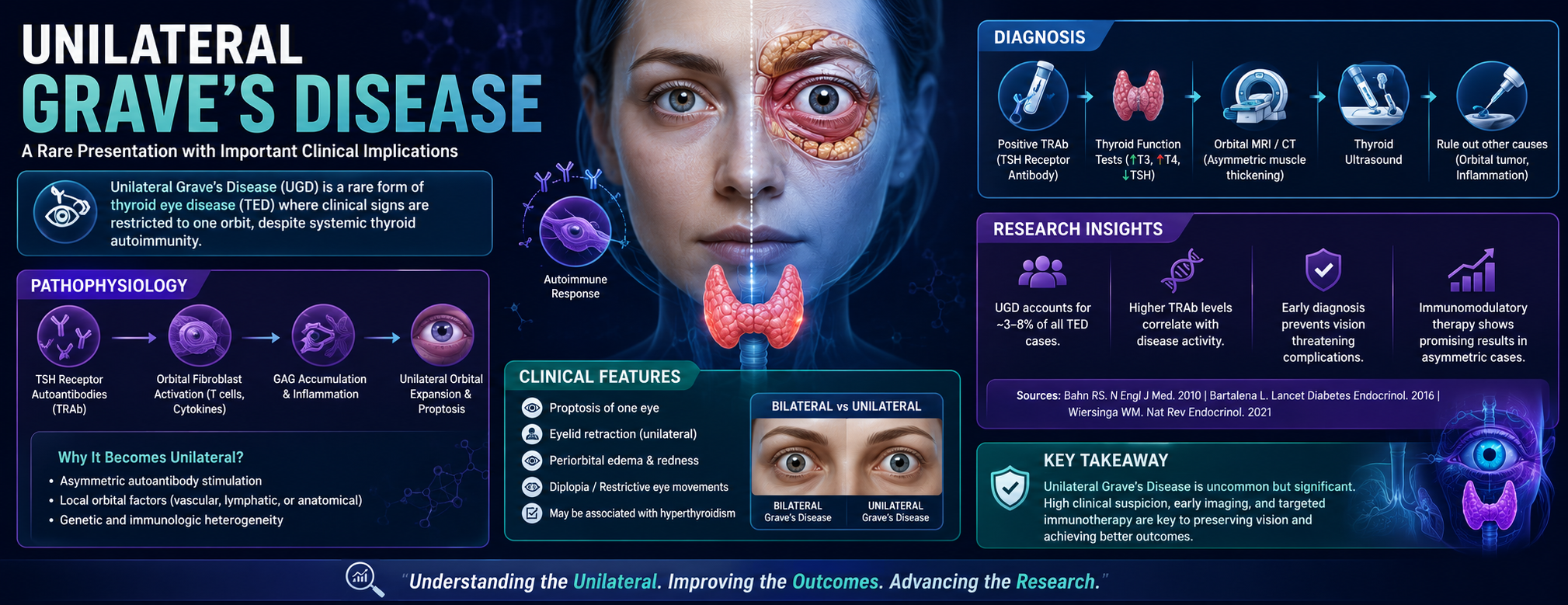
Graves’ disease is typically a bilateral autoimmune condition, but unilateral Graves’ disease (UGD) represents a rare and poorly understood variant. Its natural history remains unclear, particularly whether unilateral involvement is stable or evolves over time.
This case highlights a unique bilateral → unilateral → bilateral transition on thyroid scintigraphy, suggesting that lobar involvement in Graves’ disease may be dynamic rather than fixed . Understanding such patterns is important to avoid misinterpretation and guide appropriate clinical management.
Objectives
- Describe the clinical and imaging evolution of unilateral Graves’ disease
- Highlight variability in scintigraphic patterns over time
- Improve clinician awareness of atypical presentations
- Support better interpretation of thyroid imaging in Graves’ disease
Expected Outcomes
- Better understanding of the natural history of unilateral Graves’ disease
- Recognition that unilateral uptake may not be a fixed finding
- Improved diagnostic accuracy and follow-up strategies
- Enhanced clinical decision-making in atypical hyperthyroidism cases