

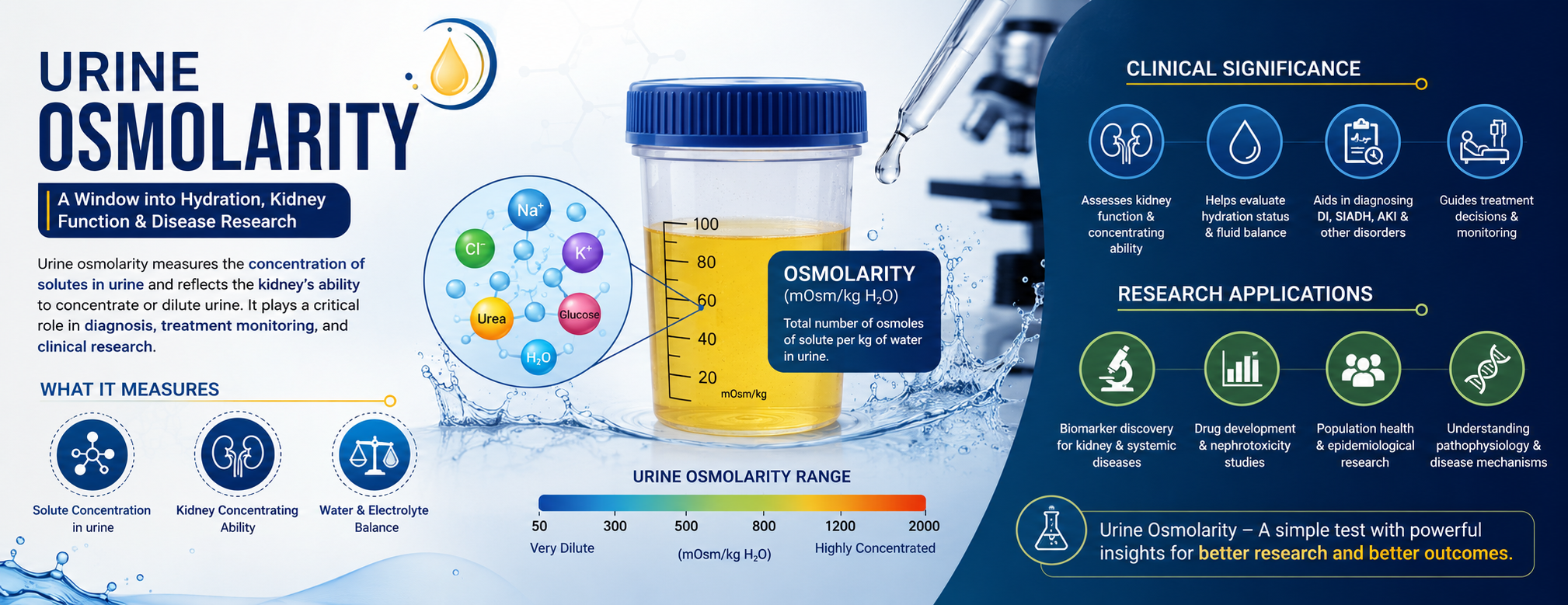
Why This Study Matters
Urine osmolality testing is widely used in clinical practice, yet significant inaccuracies exist due to the inappropriate use of serum-based formulas and lack of standardized methods. Variability in laboratory practices and sample handling further affects reliability, potentially impacting patient care.
Objectives
- Assess current practices in urine osmolality testing
- Identify common errors and gaps
- Develop a urine-specific estimation method
- Promote standardized laboratory protocols
Expected Outcomes
- Improved accuracy in urine osmolality measurement
- Standardization of testing practices
- Better clinical decision-making in renal and endocrine disorders
- Practical, cost-effective solutions for routine use